I've been coaching on Concept2s for over a decade, and I've spent the last three years in my garage with a ~$1324.00 magnetic rower. The debate between air and water resistance has never been closer, and this is the showdown I've been waiting to write.
The Concept2 RowErg is the best rowing machine I've tested, because it's the only one that survives years of CrossFit abuse, tracks your split with military precision, and never requires a subscription to work. The WaterRower is a beautiful piece of furniture that gives you a smoother, quieter workout, but it can't match the Concept2's durability or data.
Concept2 RowErg | ~$1,000 | The gold standard. Split time, drag factor, bulletproof monitor, parts for life. | It's loud, it's ugly, and it costs more than a month of groceries. WaterRower Original | ~$1,100 | Gorgeous wood, whisper quiet, smooth as glass. | The monitor is cheesy, and the water adds maintenance I don't want.

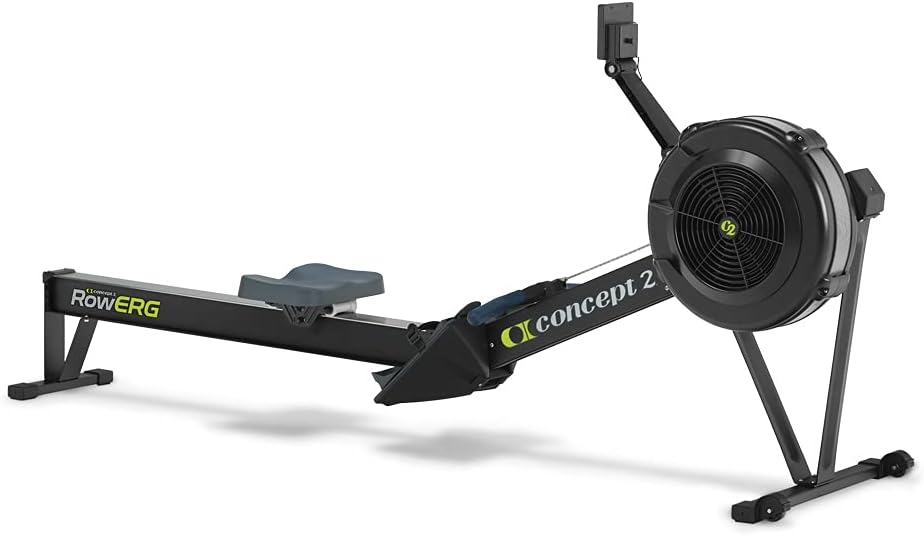
Concept2 RowErg
The PM5 monitor is the best in the business. Split, stroke rate, watts, drag factor. It's all there.
Built like a tank. I've seen these things survive years of CrossFit abuse.
Customer service is legendary. My friend's granddaughter dropped a handle on his monitor and they sent a free replacement within a week.
It's loud. That whoosh is iconic, but it'll wake up the kids.
It doesn't fold. It stands upright, and it takes up more floor space than you'd think.
At ~$1,000, it's a real investment.
WaterRower Original
The pull is smooth. The water resistance feels more like actual rowing than anything else I've tried.
It's quiet. You can row at 6 AM without waking anyone up.
It's furniture. The oak frame looks great in a living room.
The S4 monitor is cheesy. It's small, it's battery powered, and it doesn't show split time the way I want it to.
The water needs to be treated with chlorine tablets every few months.
It's heavy. 100 pounds of wood and water is not fun to move.
Compared to the Competition
The Concept2 is the benchmark. At ~$1,000, it's the machine you see in every CrossFit box and every rowing club. The WaterRower, at ~$1,100, is the one you see in a nicely decorated home gym. They're priced within ~$100 of each other, but they're completely different machines.
The WaterRower gives you a smoother, more fluid stroke. The water provides resistance that builds as you pull harder, just like a real boat. But the Concept2's air resistance is more consistent. The drag factor stays the same no matter how hard you pull, which makes it easier to track your progress over time.
Then there's the budget alternative. My ~$200 magnetic rower gets the job done. It's quiet, it's smooth, and it's a fraction of the price. But it doesn't have the data, the durability, or the community support of the Concept2. And it doesn't have the aesthetic appeal of the WaterRower. It's a compromise, and I'm okay with that for now.
Design
The Concept2 is not a pretty machine. It's a steel frame with a flywheel and a monitor. It looks like it belongs in a gym, not a living room. But that's part of its charm. It's functional, it's utilitarian, and it's built to last. The seat glides smooth, the handle is comfortable, and the foot straps are easy to adjust. I'm 6 feet tall and 190 pounds, and the rail is plenty long for me.
The WaterRower, on the other hand, is a work of art. The oak frame is gorgeous, and it looks like a piece of furniture. But it's also heavy. At 100 pounds, it's not easy to move around. The foot straps are a little long, and I have to scrunch up to get the right angle on them.
The device holder is also a problem. If your tablet has a thick case, it's not going to sit securely.
I've watched more than one iPad wobble dangerously close to the floor.
Performance
The Concept2's air resistance is the gold standard. It's consistent, it's smooth, and it gives you a workout that's as hard as you want it to be. The PM5 monitor is the best in the business. It shows you your split, your stroke rate, your watts, and your heart rate. It's the only monitor I've used that actually helps me improve. I can see my split drop over time, and that's motivating.
The WaterRower's water resistance is different. It's smoother, more fluid, and it feels more like actual rowing. But the S4 monitor is a letdown. It shows time, distance, and calories, but not much else. No split, no stroke rate, no watts. For a beginner, that's fine. For someone who wants to track their progress, it's frustrating.
Durability
The Concept2 is the most durable piece of fitness equipment I've ever used. I've seen them survive years of CrossFit abuse. Dropped handles, slammed seats, sweaty athletes. They keep going. The PM5 monitor is built like a tank. I've seen them cracked and still working. The company also sells replacement parts for everything. If something breaks, you can fix it.
The WaterRower is a different story. The wood frame is beautiful, but it's not as durable as steel. The water tank can leak if it's not properly sealed. And the S4 monitor is the weakest link. Multiple owners report cracks from minor impacts.
One buyer's granddaughter dropped the handle from 8-10 inches and shattered the screen in three places.
He emailed customer support, offered to pay, and they sent a free replacement within a week. That's good customer service, but it's still a fragile screen.
Value
The Concept2 costs ~$1,000. That's a lot of money. But it's a machine that will last you for years, if not decades. It's the only rower I'd recommend to someone who's serious about tracking their progress. The PM5 monitor is worth the price alone. It's the difference between pulling and rowing.
The WaterRower costs ~$1,100. It's a beautiful machine, but you're paying for the aesthetics as much as the performance. The S4 monitor is a letdown, and the water maintenance is a hassle. For the same price, you could get a Concept2 and a better monitor.
Should You Buy It?
If you're serious about rowing, buy the Concept2. It's the best machine on the market, and it will last you for years. If you want a beautiful piece of furniture that also gives you a good workout, buy the WaterRower.
But know that you're paying for looks, not performance. And if you're a beginner who just wants to get some cardio in before work, buy a budget magnetic rower.
It gets the job done at a fraction of the price.
One note: I'm currently testing a batch of budget magnetic rowers to see which ones hold up over months of use. I'll update this comparison when I have more data. Beats going to a crowded gym, either way.